
Introduction
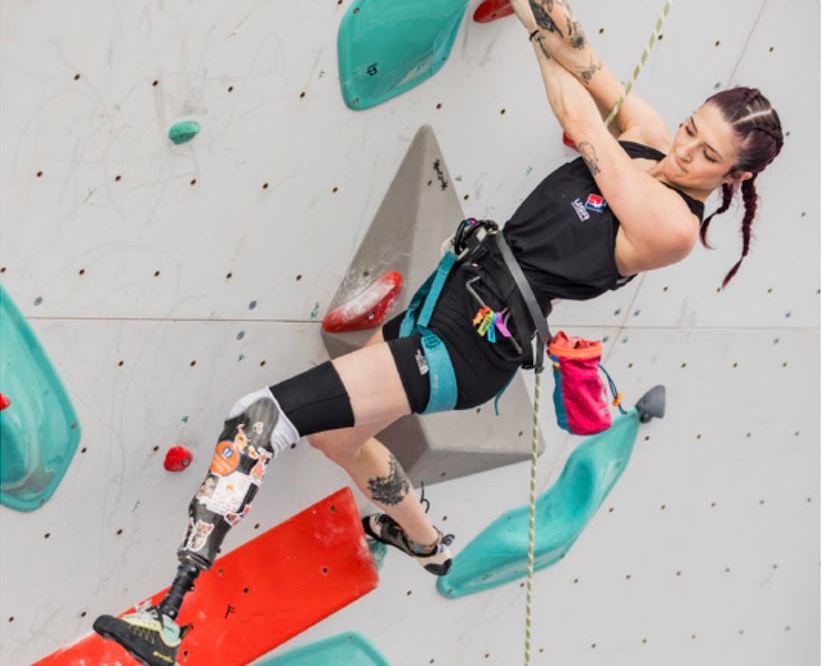
Daliya Hansen is redefining what it means to be a climber. Born and raised in Salt Lake City, Utah, she’s an adrenaline junkie turned powerhouse paraclimber who’s competed on the world stage — including a podium finish at the IFSC Para-Climbing World Championships in Seoul. After an amputation changed her life, Daliya found community, strength, and purpose through climbing. Known for her humor, resilience, and grounded outlook, she continues to inspire others — not by trying to, but by showing what true grit looks like.
Quick Facts
- Name: Daliya Hansen
- From: Salt Lake City, Utah
- Years Climbing: Almost 2
- Discipline: Sport climbing (Paraclimbing, AL2 category)
- Notable Achievement: 3rd place at IFSC Para-Climbing World Championships (Seoul)
- Other Sports: Dance, soccer, and outdoor adventure
- Favorite Climb Spot: The Front Climbing Gym, SLC
- Dream Destination: Rocklands, South Africa
Finding Climbing
Q: Can you tell us a little about yourself and where you’re from?
A: Hi! My name is Daliya (pronounced da-lie-ya) and I was born and raised in Salt Lake City, Utah. I’ve always been active — from dance and soccer to spending time outdoors. I was also the family’s “problem child,” always getting into scrapes and hospital visits for broken bones and stitches. I guess I’ve always pushed my limits one way or another!
Q: How did you first get into climbing?
A: Growing up in Utah, almost everyone climbs, but I really got into it after meeting Jake Frank (@jakewithnolegs) at an amputation support group. He told me about an adaptive climbing team at The Front, and I was hooked!
Q: Do you remember your very first climb — what was it like?
A: I’ve always been an adrenaline junkie. Reaching the top and not feeling the ground beneath me was incredible. The sore muscles afterward made me feel alive — I was “high” on accomplishment!
Q: How long have you been climbing, and what drew you to it?
A: I’ve been climbing for almost 2 years. What really drew me in was finding a group of people who understood exactly what I was going through and didn’t treat me like I was “inspirational.”
The Competitive Spirit
Q: What’s your favorite style of climbing and why?
A: I love sport climbing. I’ve always been a problem solver, and sport climbing combines that mental challenge with pushing your body to its limit.
Q: Do you have a favorite route or problem that sticks in your memory?
A: Definitely the first competition route I ever climbed. I fell at the same hold as all the other girls I was competing against — it was the first time I felt like I truly belonged. I was less than six months post-op at the time.
Q: Have you competed in para climbing competitions? What’s that experience like?
A: Yes! I just got back from Seoul, South Korea, where I placed 3rd in the women’s AL2 category at the IFSC Para-Climbing World Championships. I’ve also competed in the SLC and Innsbruck Para-Climbing World Cups. The atmosphere is intense — you can cut the tension with a butter knife — but it’s amazing to see how much growth happens between comps.
Q: What goals are you working toward right now?
A: I’m focusing on my mental game. With paraclimbing being added to the LA 2028 Paralympics, of course I’d love to be a part of that, but I know my mindset needs to be at its strongest.
Adaptation and Strength
Q: What kind of adaptations or techniques have you developed in your climbing?
A: I flag a lot! If a foothold isn’t great, I swap feet for better control and balance. Because I don’t have my left leg, I compensate with my right side — my right arm and grip strength are actually much stronger now.
Q: How has being part of the para climbing community influenced your journey?
A: The para-climbing community is incredible. They just get it. I don’t have to explain if I’m having a bad leg day or if my prosthetic isn’t fitting right. We support each other, swap beta, and share plenty of terrible jokes.
Q: What do you wish more people understood about para climbing?
A: That we’re athletes too. Para athletes train just as hard — if not harder — than anyone else. We’re not here to be “inspirational” or for media attention. In climbing, there are multiple para categories (B, RP, AU, AL), and each deserves the same respect as any able-bodied division.
Mindset and Motivation
Q: What’s been the biggest challenge for you in climbing, and how did you overcome it?
A: Definitely impostor syndrome. The people I compete with are so strong and make it look effortless. I’m still learning to quiet that voice that says I don’t belong — it’s a work in progress.
Q: How do you stay motivated during tough training sessions or competitions?
A: I dedicate one day a week to climb just for fun — no projecting, no training, just routes that look enjoyable. It keeps my passion alive.
Q: What’s the best piece of advice you’ve ever received as a climber?
A: You’re going to have bad days — that doesn’t mean you’re a bad climber. Don’t chase grades; they’ll come as you focus on movement. Rest before you think you need to. Trust your feet (or foot). And if you’re scared, breathe until the rock stops feeling like an opponent. Climbing is 30% achievement and 70% failure.
Beyond the Wall
Q: What do you enjoy doing outside of climbing?
A: I love reading, being outdoors, spending time with family, and playing Magic: The Gathering with friends. I wouldn’t be where I am without the support of those around me.
Q: If you could climb anywhere in the world, where would it be?
A: Rocklands, South Africa!
Connect with Daliya
Follow Daliya and her journey on Instagram:
- Instagram: @daliya.hansen


 thedihedral.com