
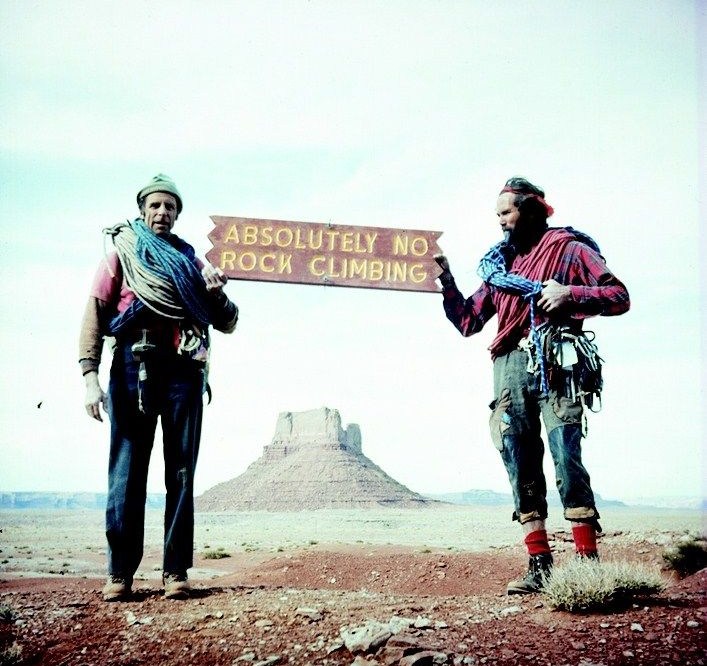
I’ve heard it more times than I can count…
“Climbing isn’t political. I just want to climb.”
I understand the impulse behind that sentiment. Climbing often feels like an escape, from noise,
from systems, from everything heavy and complicated about the world. Rock doesn’t argue
back. Gravity doesn’t care who you voted for. There’s something undeniably pure about
movement, especially when it comes to climbing. It taps into a feeling that’s hard to capture with
words.
But here’s the uncomfortable truth I keep running into at every turn.
Climbing is deeply political, whether we admit it, acknowledge it, or not.
It isn’t because climbers are rallying with slogans at the crag; it’s built into the very fabric of how
we access and interact with the land. Climbing is intertwined and exists within systems of land,
access, power, history, money, and culture. Choosing not to talk about those systems doesn’t
remove us from them. It just means we stop paying attention to who they benefit and who they
exclude.
Land Is Political, So Climbing On It Is Too
Every climb happens somewhere. And that “somewhere” has a history.
Public land policies, private ownership, conservation laws, access agreements, closures, and
permits, none of these are neutral. They are shaped by political decisions, often made long
before we tied in or pulled on at the crag.
Many climbing areas only exist because:
● Land was seized or displaced from Indigenous peoples
● Access was negotiated (or tolerated) under specific conditions.
● Use is regulated by agencies responding to public pressure.
When we say “keep politics out of climbing,” what we often mean is “don’t make me
uncomfortable while I benefit from decisions already made.” But the politics are already there in
who gets access, who doesn’t, and whose voices matter when that access is threatened.
Who Gets to Climb Is Not an Accident
Climbers like to see climbing as a meritocracy; you show up, you try hard, you get better. But
that story leaves out a lot and doesn’t align with reality.
Time, money, transportation, proximity to climbing areas, gym access, gear costs, and cultural
safety are not evenly distributed. They are shaped by broader social and economic realities that
some people do not face.
When certain groups are underrepresented in climbing, it’s not because they “just didn’t find it.”
It’s often because the barriers were higher, the welcome was quieter, or the culture signaled this
space isn’t for you.
That is political. Even if no one intended it to be.
“Leave No Trace” Is a Value System
We like to frame climbing ethics as common-sense knowledge that everyone should know.
Don’t litter. Respect closures. Stay on trail. Clean your chalk.
But ethics don’t come from nowhere or make themselves. They are values we collectively
decide to prioritize and enforce as a community.
When we argue about bolting, development, gatekeeping locations, social media exposure, or
crowding, we’re not just arguing about climbing. We’re arguing about:
● Who gets to decide what’s acceptable
● Whose experience matters most
● Whether preservation outweighs access, or vice versa
At the end of the day, those are political questions. They are about power, responsibility, and
tradeoffs.
“I Just Want to Climb” Is Still a Position
Wanting climbing to be apolitical is understandable. Life is heavy. Not every space needs to
carry every conversation.
But opting out is still a stance, one that often favors the status quo.
If access becomes restricted, if land is closed, if voices go unheard, silence doesn’t protect
climbing. It just means decisions get made without broader input.
The irony is that many of the freedoms climbers enjoy today, open access, protected lands, and
established ethics, exist because people engaged politically. Climbers before us advocated,
organized, negotiated, and sometimes fought to keep those spaces available for the climbing
community.
This Isn’t About Ruining Climbing
Saying climbing is political isn’t about turning the crag into a debate stage. It’s not about
shaming people who just want to move on rock.
It’s about honesty.
It’s about recognizing that climbing doesn’t exist outside the world it exists within it. And if we
care about climbing’s future, we can’t pretend that access, inclusion, land use, and stewardship
are someone else’s problem.
You don’t have to be loud.
You don’t have to be perfect.
You don’t have to agree with everyone.
But paying attention matters.
Climbing Teaches Us This, Whether We Like It or Not
Climbing already teaches us about responsibility. About consequences. About how individual
actions add up.
Acknowledging the political nature of climbing doesn’t make it less meaningful. If anything, it
deepens the practice. It reminds us that being on the rock is a privilege one tied to decisions
made by people, shaped by history, and influenced by what we choose to care about now.
You can still climb for joy.
You can still climb to escape.
You can still climb because it feels like freedom.
Just don’t mistake freedom for neutrality.


 thedihedral.com
What can I say but…YES!!
LikeLiked by 1 person
Well stated— if a little disconcerting! Thanks for sharing.
LikeLiked by 1 person
Quite well detailed. A different topic for me and one that makes one think.
Not much into climbing except a few kind of Hill hikes in the past.
LikeLiked by 1 person
Nice to see you using a pic of Fred Beckey
LikeLiked by 1 person
Legend!
LikeLiked by 1 person
Brilliant piece.
LikeLiked by 1 person
Unfortunately, almost everything, especially in the USA somehow goes political…
LikeLiked by 1 person