
One of the most important conversations to have within rock climbing is safety, and although safety is talked about often, it is not often enough.
Safety in rock climbing covers a wide facet of areas from wilderness protection to proper training. Ultimately, the most important reason to talk about safety is because it saves lives.
Recently, experienced climber and coach Hector Diffut decked from thirty feet off the ground. By the time he realized he wasn’t clipped into his auto belay it was already too late. Hector survived with a few severely broken bones, but not everyone is that fortunate. A friend recently shared her story of decking from forty feet up, all because her belayer wasn’t paying attention. It’s tough to call a broken back lucky, but she survived which isn’t a guarantee when falling from that height. Another friend decked from twenty feet due to not checking their protection, and another friend suffered a broken wrist due to user error. There are numerous tragedies where climbers aren’t lucky enough to escape with merely broken bones.
Accidents happen, it comes with the territory, but understanding the inherent dangers in climbing should reinforce the need to engage in best practices at all times. Whether you are climbing indoors or outdoors, sport climbing or bouldering, safety should always come first.
We’ve come up with our top three pieces of advice for climbing both inside and outside.
Carrot
Climbing inside can offer a strange veneer of security. It’s a controlled environment, floor staff is there to help, there are safety procedures and signs everywhere. But ultimately it is up to the climbers to protect themselves from potential harm. Despite all the safety warnings and precautions most of the serious injuries I have witnessed have happened indoors. That being said, here are my top three pieces of safety related advice while climbing indoors.
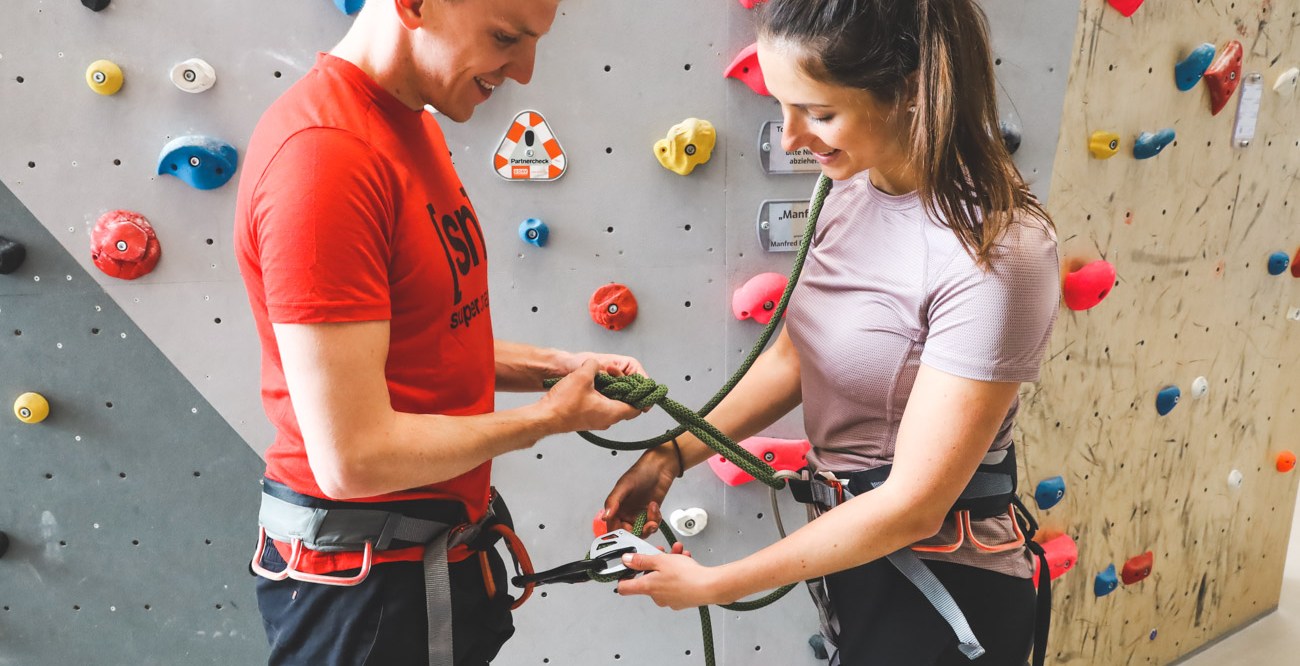
- When sport climbing, always engage in a partner check. I’m certainly guilty of loading a belay device incorrectly every once in a while, and luckily I’ve caught myself or my partner has caught me. Simple mistakes like that can go unnoticed without partner checks. Sometimes those mistakes can be more egregious, after a long session, it wouldn’t be unheard of to fail to tie in at all, or for your partner to fail to tie in properly. Partners checking one another is one of the best habits a climber can have.
- One of the most underrated aspects of climbing safety is communication. When Hector Diffut decked he was wearing headphones and couldn’t hear his mates yelling to get his attention. Similar falls occur when partners fail to relay what they see, hear, and feel. Communication should happen both on the ground and during the climb. Sometimes climbers are too prideful to declare that they feel scared about a particular move, the belayer may then be lulled into a false sense of security, and fail to properly prepare for the possibility of a dangerous fall. On a similar note, belayers sometimes see a move that a climber hasn’t noticed, and because of the taboo nature of spraying beta, they keep their mouth closed. The simple act of communicating that you have beta if the climber needs it can go a long way in preventing a possibly troublesome scenario.
- Lack of attentiveness has to be the most common danger in rock climbing. As climbers we get comfortable with our surroundings. We get comfortable with the abilities of our climbing partners. Comfort begets complacency, and that is when accidents happen. It’s a horrible feeling when you’re working a route, you come to the crux, and check to make sure your partner is with you, only to find too much slack in the system, and your belayer engaged in a conversation with their friend on the floor, twenty five feet below. A long belay can be wearisome. It is easy to let the mind wander when the risk seems low, but falls can happen even on the easiest routes in the gym, if we aren’t attentive, then what should have been an easy catch could end in something much more serious. Attentiveness while bouldering indoors is equally important. We often have to deal with kids and beginner climbers trying to figure out the rules of climbing etiquette. There isn’t a weekend at the gym where I don’t see a new climber standing beneath someone trying to send a boulder. A person falling from fifteen feet directly onto a kid’s head is not a pretty picture.
Partner check, communication, and attentiveness. Remind yourself of these values as often as possible, and you will be the ideal climbing partner. Side Note: I mentioned these three goals to a guy at my gym, and he mentioned that they work as great advice for relationships too. Good call!
High-Clip
Unlike the gym, the outdoors is a big, scary place. You have all of the gym things to worry about plus Mother Nature and outdoor ettiquete. On top of that, you can’t rely on having bomber gear. Gym staff usually maintain holds, draws, and anchors remarkably well. Although climbing coalitions try their best to do the same outside, nature may have a different plan. Rock breaks, gear fails, bolts rust…it simply isn’t enough to be perfect. Climbing is dangerous no matter what, but the element of chance is even greater outside where less can be controlled and predicted. Thus, it is in our best interests to have the safest habits possible to minimize the effects of whatever perils that we may encounter on a route.
- Slow and steady wins the race. I cannot stress enough how important it is that you understand how your gear/systems work. If you understand how and why it works, you can adapt to any situation. Sometimes, however, we get caught up in routines, or we’re rushing, and we go on autopilot. This is when all of your knowledge goes out the window and you do things from muscle memory. Even if you do a check afterwards, you may not catch a fatal mistake, especially if you are already zoned out. When setting up a rappel or even lowering off of a route, justify each step of your process. Why can you untie right now? What happens if this bolt fails? Why can you go off belay? If you take your time at each step, your final check will be a redundancy. Even the most experienced climbers make silly mistakes, and, sometimes, it costs them their lives. Treat every climb like it is your first so that it is not your last.
- Tie stopper knots. This is another situation where you need to ask yourself questions. What happens if I run out of rope? There are many different work arounds to this, depending on if you are climbing or rappelling, but none of them include leaving an end free. Even if you can do some fancy trig and justify why you could never run out of rope, you better still tie a stopper. It takes a few seconds. As I explained in #1, it’s important to be able to adapt to any situation, and a stopper helps you do that. It is crazy to me how many people just fall off the end of their ropes. Unless some ice or rock shears off your rope (which happens), you can easily protect yourself from this type of harm. You can’t control nature, so again, maximize what you can control and tie stopper knots. Just be sure to untie them when you are done!
- Know yourself. It’s great to push grades and try hard, but outside, you don’t get the luxury of pushing as hard as you want. In a gym, there might be unfortunate falls, but nothing should really do you much harm (it happens, but usually it usually involves human error as Carrot explains). Outside, however, there are places on routes where if you fall, you die. Or get seriously injured. It is just the way the rock is and the gear is placed. Ratings like PG, PG-13, R, etc. usually give you a good idea of this, but read the route and the guidebook for more details. If you’re not sure if you can make it through a sketchy section, perhaps the route is not worth the risk. Ultimately it’s up to you as the climber to decide how much risk you want to take, but it is good to know how much added risk there is if you are more likely to fall. Even if you can physically do a sketchy section, consider whether you can mentally do it. Personally, when I get scared on a route (given my name, it should not be surprising that this is a frequent occurrence), I either push through, or I hang from the wall and shake like a leaf. It doesn’t matter how easy the climb is; once I freak out, it’s over. So what would happen if I freak out in a run out section with a dangerous fall? Well, either I need to pull it together to the next draw, or it’s over. This may not be a situation you want to find yourself in, so when considering a route, factor in both the grade and your fear level.
Have more tips? Comment them! Stay safe inside and outside!


 thedihedral.com
This is a great post! Communication is key and I’ve been teaching people that the last part of a quality “partner check” is to share your “action plan”… i.e. “What are you going to do when you reach the top of the route?”… this step undoubtedly helps cut down on confusion and belayer error. I also encourage people to NOT reach the anchor and say what I call the most dangerous word in climbing… “Ok!”…. That word can and has been misinterpreted many times. Really great post you all! I will call out she is not tied into the proper place of her harness in the image you used LOL.
LikeLiked by 1 person
David, thank you for the encouragement on this one…that notion of “action plan” is such a great addition to the conversation, and one that I will absolutely start embracing. I can’t believe that we missed the mistake on the harness, her partner looks like he is about to miss it too. You’re the best, thanks a million!
LikeLike
Great advice! While not a climber, I took care of many of them in the hospital. Most common injuries I saw? Broken calcaneus (“heelbone”) on both feet. They hurt like hell and you can’t walk for a long time (bed or wheelchair with legs elevated). Broken vertebrae – usually low back – from the same sort of fall. You’d think landing on your feet is a good thing, but neither your heels nor your spine are meant to take that sort of compression. That one lands you in an uncomfortable brace for 3 months, but walking is usually normal after that, unlike broken heels. Heels and spine together make it even less fun.
LikeLiked by 1 person
Hearing about it from your end makes it sound even worse! Thank you for a little insight into what happens after the fall.
LikeLiked by 1 person
The best advice, “Know yourself.” Great post.
LikeLiked by 2 people
I think the ancient Greeks would agree too!
LikeLiked by 1 person
😃
LikeLike
More reasons I’m just a hiker. You guys are doing a great service to your fellow climbers. Keep up the good work.
LikeLiked by 1 person
Thank you!!! This was a really good reminder for us too. It’s too easy to get lulled into the assumption of safety.
LikeLiked by 1 person