
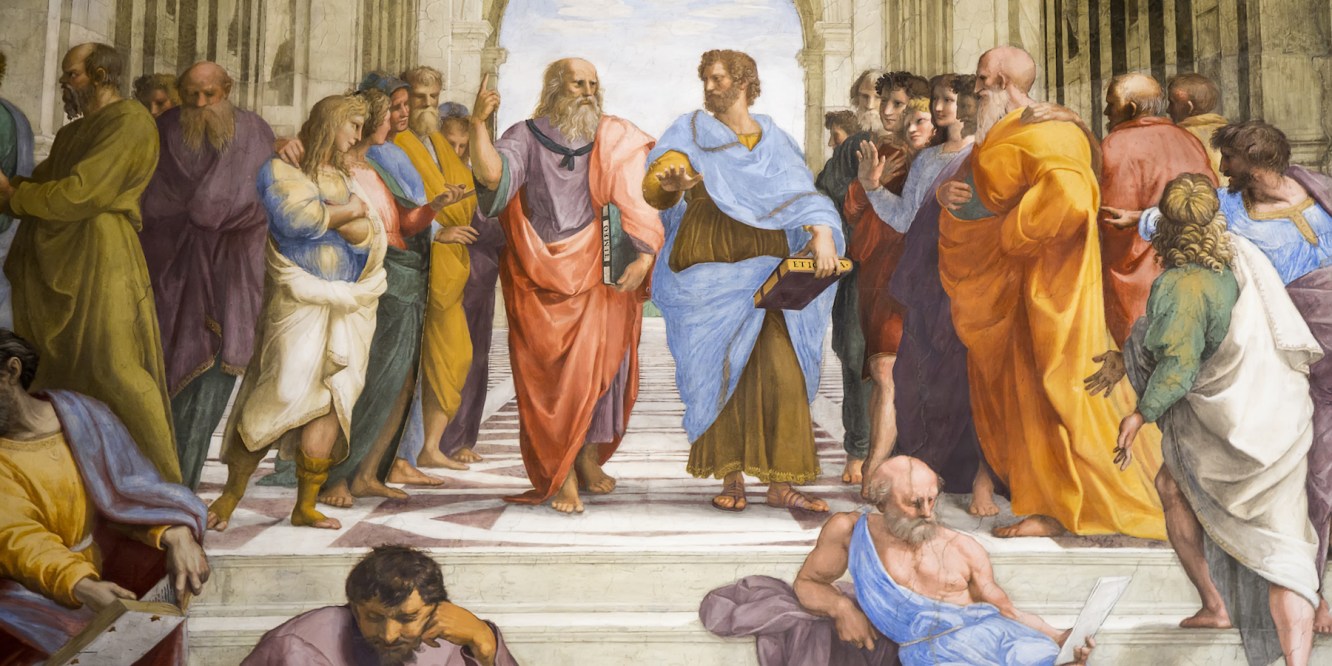
So, you wanna be a philosopher, but you aren’t sure where to begin. theDIHEDRAL is here to help. As most of you probably know, the etymology of the word ‘philosophy’ can be broken down into two parts. Philein meaning love, and Sophia meaning wisdom. Put them together and we have philosophy, or the love of wisdom. If you are a lover of wisdom, then congratulations, you’re a philosopher. At least in the loosest sense of the term.
Of course, when someone actually wants to be a philosopher, it may take a little more than simply loving wisdom. In fact, it takes a lot more. We can easily note the difference between someone engaging in a philosophical conversation and someone doing philosophy. Pretty much anyone can engage in a philosophical conversation. We do this all the time. We’ve all experienced those wonderful conversations that last late into the night. The conversations where time seems to stop, and clarity seems ubiquitous. These philosophical exchanges can pop up anywhere from the crag to the breakfast table. They seem to be especially prevalent around campfires1. Children too, often hit upon philosophical nuggets. Children ask wonderful philosophical questions without fearing embarrassment. However, the thing that separates the deep philosophical conversations we occasionally fall into, as well as the magnificent ponderings of minors from doing philosophy is the dependence on logical rules which trained philosophers rely on in order to make assessments.
So, step one on the path to becoming a philosopher is to work on some logic-based foundations. I often say that the primary tool in a philosopher’s toolbox is logic. At the heart of any good philosophical discussion is rational argumentation, and at the heart of rational argumentation is logic.
After beefing up your logical prowess, there are a few things (in no particular order) worth working on.
Ask questions! Then ask better questions. It’s tough to get good answers without asking good questions. Unfortunately, we exist in a society that discourages being wrong. That in turn discourages people from asking questions, lest they appear to be ignorant. We’re all ignorant, we know almost nothing. Get comfortable with that! If someone claims to care about wisdom, but isn’t asking questions, then I would be mighty skeptical as to how much they actually care.
Get comfortable with being wrong. This goes along with asking questions, but the point should be driven home. Philosophy is a lot like climbing in that the majority of the time we fail. A philosopher who claims to have all the answers is sure to be nothing more than a charlatan.
Read a lot! This should probably say ‘learn a lot’, considering the number of good multimedia outlets available. Reading isn’t as essential to philosophy as it once was. From recorded lectures, debates, and tutorials on YouTube, from podcasts (like theDIHEDRAL Podcast), from audio files, from movies and shows, people can learn just about anything there is to learn, but I’m a purist and think that reading books is still the epitome of learning. The point being: find good sources2 to learn from and try to replicate what good philosophers do.
Logic, curiosity, ignorance, and learning. If you embrace these attributes, then you’re already a philosopher.
Logic, curiosity, ignorance, and learning alone won’t necessarily move a philosopher into the professional world. For that, you’ll have to turn those skills into a degree or two or three. But before taking those steps there are a few things to be aware of. There is an abundance of people with philosophy degrees, and not an abundance of philosophy jobs. It is a highly competitive field, and so standing out from undergrad through graduate school is a plus. Reading and writing go with the territory, so you will not want to shy away from managing and improving these skills. Grad school is hard, but immensely rewarding. Working on philosophical issues all the time with people who are working on philosophical issues all the time is incalculably gratifying, even if the pressure to perform is sometimes incalculably demanding. Upon finishing grad school awaits the interesting world of adjunct professorship. All of the workload at a tenth of the pay! Despite the abusively low wages, you’ll want to take this stop seriously. It is not difficult to recognize those who will be stuck in the world of adjuncting (part time teaching) forever from those who will rise to the stature of full professor. Teaching is like any craft, emulate the greats without losing your voice and you’ll be fine.
In a scenario where the plan goes south and you end up outside the world of professional philosophy, don’t sweat it.3 You have a skill that translates into all facets of life from child rearing to business administration. In the worst case scenario, you are still a philosopher, and from my point of view, biased as it may be, that is part of living the good life!

- Stoners are no stranger to philosophical conversations as well.
- For getting your feet wet, I think Thomas Nagle’s Mortal Questions is a great book for all philosophers, including aspiring philosophers. I’d also recommend Daniel Dennet’s Intuitions Pumps. For something very recent, I’d recommend David Chalmers’ new book Reality+. I may have to do a follow up to this article listing good books for aspiring philosophers. I don’t watch a ton of TV, but I thought The Good Place did a great job of bringing some philosophical challenges into the mainstream. Show creator Michael Schur wrote a spectacular philosophy book called How to Be Perfect, which I would also recommend. In terms of philosophy podcasts, my favorite is a wonderful show and quality investment of time called Philosophy Bites.
- Professional philosophy doesn’t have to be the goal of a degree, and for many the world of professional philosophy simply isn’t what they thought it would be. A great example of this is the Maverick Philosopher, who resigned from a tenured position at the age of 41. He moved to the Superstition Mountains in Arizona and has been working independently for years. His motto: Study everything, join nothing. His blog has been ranked as one of the 100 best.

 thedihedral.com
Taking notes and considering the additions to my small library.
LikeLiked by 2 people
That is great!!! Let me know if you end up getting any!
LikeLiked by 1 person
I will.
LikeLiked by 1 person
Great read & lots to explore. Can you add a Philosophy link from the dihedral that you recommend?
LikeLike
Sure thing…
https://www.buzzsprout.com/489202/8052612
LikeLiked by 1 person
Wow Thanks! I was still looking up all the links. Listening to audible sample of Nagles book & going to get. Happy New Year to you & the team. I love your posts.
LikeLiked by 2 people
Thank you Sunyamar, happy New Year to you as well!
LikeLike
I enjoy conversations that prompt new topics and ways of thinking. Great post.
LikeLiked by 2 people
That is awesome to hear…thank you Mary!
LikeLike
“By all means marry; if you get a good wife, you’ll become happy; if you get a bad one, you’ll become a philosopher.”
― Socrates
LikeLiked by 2 people
I love that Fred!!!
LikeLiked by 1 person
So did Socrates…
LikeLiked by 1 person
My philosophy professor — Ria Stavrides (an Austrian woman) — loved Socrates so much she went to Greece to study. As it happened, she met and married a man named Socrates. The marriage didn’t go well and they divorced. She was utterly disgusted by the man. Years and years later, when she was my professor I went to her office one warm spring day and said, “Isn’t it a beautiful day to go to the mountains and sit by a creek?”
She thought I said Greek. “Greek? Greek? Why do you want to sit by a Greek?”
“CREEK, Dr. Stavrides.”
“Oh that is a relief. If you ever get the urge to sit by a Greek, come and talk to me first.” I think being married to Socrates might have contributed to her becoming a philosopher.
LikeLiked by 2 people
Hahaha!!! That is a brilliant story!
LikeLiked by 1 person
LOL!!!!!
LikeLiked by 2 people
I gave it a shot but then bailed on it. My professor said, “but Martha, you are an artist.” Philosophically.
LikeLiked by 2 people
I love that!!! Philosophically of course!
LikeLiked by 1 person
I wanted to be a philosopher until I started taking Philosophy courses at the University of Washington.
Then I switched and became a Geology major.
Much happier.
LikeLiked by 2 people
Rock and Philosophy is the story of my life!
LikeLike
Excellent. Thought-provoking.
LikeLiked by 2 people
Thank you Linda, that was such a nice comment to read!
LikeLiked by 1 person